
The Complete Guide to Residential Winter Storm Restoration
Winter weather can be the cause of a whole host of issues for homeowners, but fear not! There is one tried and true way to avoid weather-related catastrophe: prepare.
Here we’ll highlight some of the most effective moves a homeowner can make when it comes to preparing your house for winter.
It Starts with Winter Weather Awareness
For the most part, where you live determines the types of weather events you’re most likely — and best equipped — to handle. Montréal can always count on heavy snow, while Toronto tends to deal more with icy conditions and fluctuating temperatures. Out west, cities like Vancouver face relentless rain.
But then, there are outlier events. As weather patterns shift, we’re seeing more extreme storm events — making it harder to know how to prepare. Think of the flash floods that hit Calgary, the ice storm that knocked out power across Québec, or the atmospheric river that brought historic rainfall to southern BC. These kinds of events can catch property owners off guard and lead to costly damage. With a bit of planning, though, you can reduce your risk and be ready for whatever nature throws your way.
Know Your Property
Knowledge is power. This checklist highlights some of the more important questions to ask when starting to inspect your property.
- Is your home a mature property or new construction? Neither is necessarily more immune to weather-related damage.
- What condition is your property in? Is there a bit of deferred maintenance? Over time, this is your main concern.
- What type of area do you live in? Cities are at highest risk for drain backups, while rural areas often struggle longer through power outages.
- What is the grading like on your property? Do you have a basement? Given the chance, water will make its way through the foundation and into the basement or house. Get ahead of an inevitable problem and you can shore up your home with relatively simple fixes.
- What is the primary type of building material used in the home? Wood-framed buildings are penetrated more easily by water and lack of maintenance, but concrete and metal are more susceptible to erosion and rust.
- Do you have a sloped roof or a flat roof? Metal or shingled?
This type of checklist may seem simplistic, but being aware of the common pitfalls to which your property is predisposed will give a much more focused approach to your semi-annual self-inspections.
Disaster Preparation: The Single Most Valuable Tool
When it comes to fortifying the exterior of your home – or what in our business is called the ‘building envelope’ – there is no substitute for semi-annual inspections. A perimeter walk is a great place to start. As you walk, take notice of all components of the building envelope. Examine anything that is keeping air and water out of the structure: roofing, siding, shingles, brick, windows, and doors. Look for changes to the ground adjacent to the home – do you notice any new erosion or accumulation of soil, debris, or other material near the ground adjacent to the home? Get picky. Do gutters need clearing? Can you find any deteriorating caulking? Any significant wear and tear on doors and windows?
Next, move to the interior of your home and work your way from top to bottom. The attic is a common place to detect issues stemming from winter weather. Check for any holes – however small – in the ceiling and junctions. Take note of any exposed insulation, drafty windows, and any signs of trapped moisture from poor ventilation.
In your living spaces, seek out spots you might normally miss. Think beyond eye level! Look closely at ceilings, where the wall meets the ceiling, and where the wall and floor join. Poke around window jambs. Are you noticing anything new? Drafty windows, subtle water stains on ceilings, condensation buildup on the insides of windows or walls… any of these can be early warning signs of more serious or persistent water damage. Left unchecked, this damage could lead to mould, structural compromise, and costly repairs. The earlier you spot the warning signs of an issue, the better.
How frequently should these self-inspections be done? We like to use the changing of the clocks as our reminder. Every time we ‘fall back’ or ‘spring ahead’, we know it’s time to give our property a solid self-inspection. As the homeowner, you are the closest to your property. You know its quirks and its common pain points, and you’re your own greatest asset when it comes to property defense.
Three Major Contributors to Winter Weather Property Damage
Water Damage
Frozen or Burst Pipes
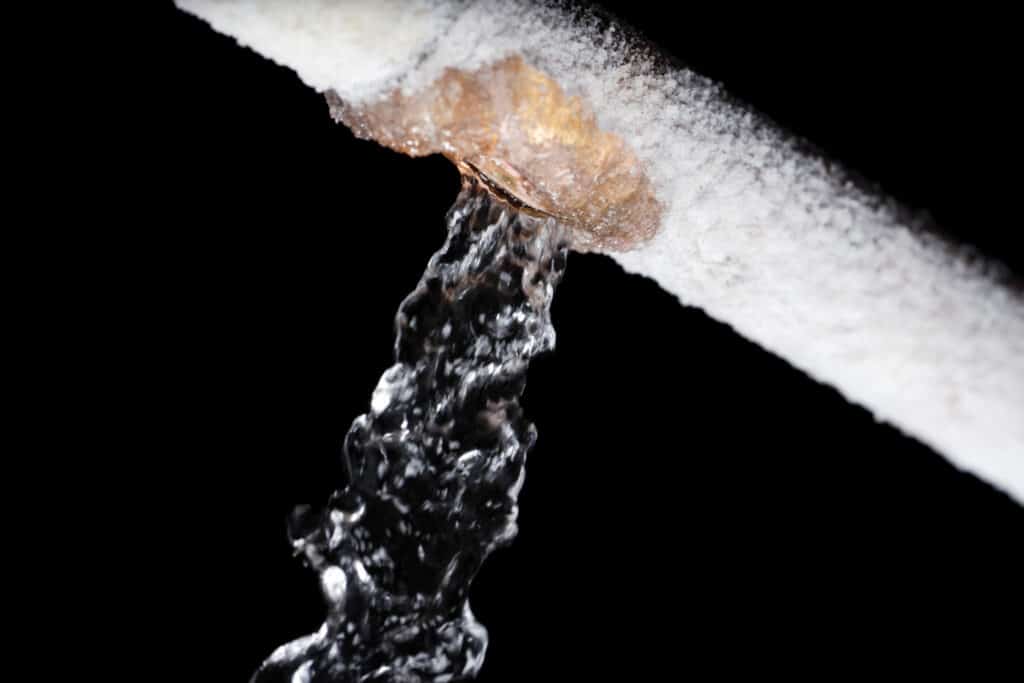
Freezing pipes are the biggest contributor to water damage in the home during winter months. Most often seen in vacant properties (think vacation homes, houses for sale, or primary residences whose occupants are away) and basements, water supply pipes burst when the standing water inside of them freezes, expands, and must force its way out. Any system that has water running through it can freeze – it’s not uncommon for us to see cracked toilet tanks due to frozen tank water!
Should you return to a property and find yourself without running water, assume your pipes have frozen. Visually inspect any exposed pipes for damage, paying special attention to the joints and elbows. And especially keep an eye out for signs of water damage after the pipes thaw. When the water starts flowing again is when most leaks appear. At the first sign of damage, contact your disaster mitigation and restoration company immediately.
In some regions, we find that even more common than water supply damage is the issue of drain backups. Drain backups occur most often in areas that experience freeze-thaw cycles. If the phrase “Don’t like the weather? Just wait fifteen minutes!” is something you find yourself saying every spring and fall, this one’s for you. Keep an eye on those drains. When snow and ice form and then melt quickly, outflow can become impeded (by debris or sheer volume of meltwater) and back up through drains, sinks and toilets – making this outdoors problem your indoors headache.
Tips on How to Prevent Frozen Pipes
If you plan to be away from your home for any period of time during the winter months, take action. When it comes to preventing frozen pipes, you’ve got options. If you’re more comfortable with technological solutions, a wide variety of cameras and sensors are available to help keep an eye on things remotely. Perhaps you might consider a programmable thermostat, or a cloud-based model that allows for remote control and can monitor for temperature drops. Be sure to check with your insurance provider for any discounts that may be available with the use of any of these added security measures.
If these solutions feel impractical given your situation, there’s always the traditional route: get a house sitter. Nothing beats having a pair of trusted eyes on your space to check on things every so often.
Our specialists also recommend:
- Keeping your home thermometer set to a minimum of 13 degrees Celsius (55 degrees Fahrenheit). This is generally considered safe to avoid issues with winter damage, however, please consider whether you are leaving pets in the home (with a watchful eye) and the specific temperatures they will need to remain comfortable.
- Opening all interior doors in the home, allowing for better air flow and temperature regulation to all areas of the house.
- Consider adding insulation around water lines in vulnerable areas (perimeter walls, basements, cabinets).
- Leave faucets running at a slow stream (to keep water moving and avoid freezing).
- Open cabinets that house water supply pipes, allowing warm air from the house to circulate and minimize the risk of bursting.
For drain backup prevention, be sure to quickly clear all catch basins and gutters (both at the street level, and on your property) of any leaves, debris, or other buildup. You may also consider investing in drain sensors for early detection. Or, better yet, install a backflow preventer in your sewer system, allowing water to flow out, but not back in. For residential properties, these aren’t incredibly expensive upgrades. And be sure to check with your insurance provider for available discounts!
In the event of a water damage incident, it is imperative that any damage be completely and expeditiously handled. Remember, if a temperature can be tolerated by humans, it is habitable by mould.
Ice damage
Ice Damming
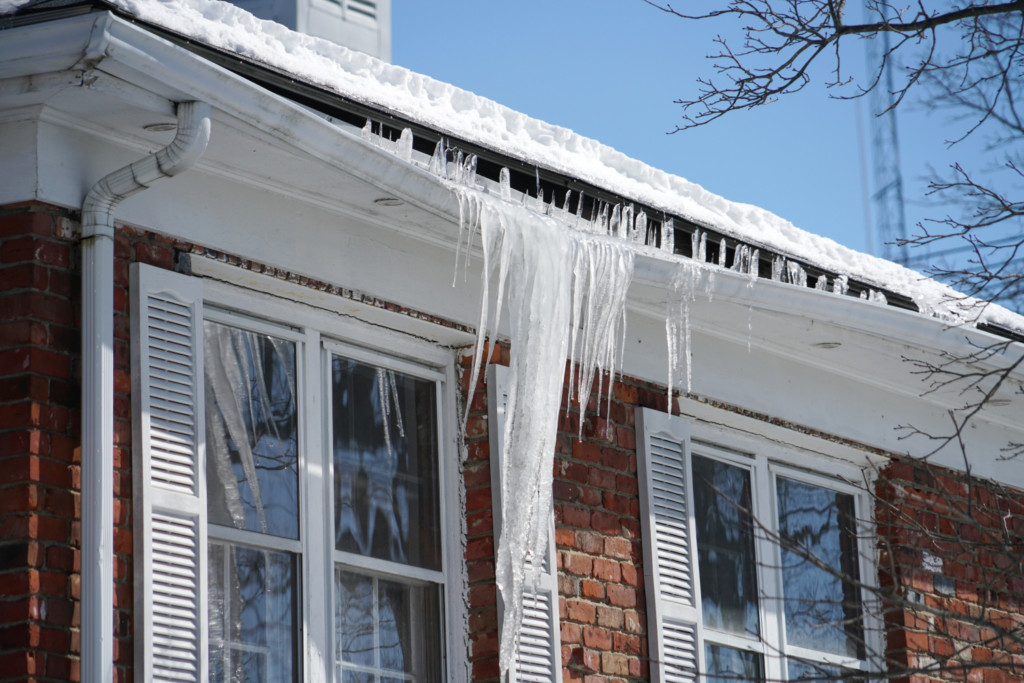
Snow and ice damage to a roof typically comes in the form of ice damming. Very common in our Canadian environment – where we see a lot of the freeze/thaw cycles mentioned earlier – this winter nuisance is really just water damage by a different name. Ice damming is commonly caused by heat escaping through a poorly insulated attic, melting snow that has accumulated on the roof, which then runs to the eaves where it re-freezes. The forming ice forces its way under shingles and then melts once again when it encounters radiant heat from the attic. Unchecked over time, water damage from snow and ice on the roof can cause a whole host of problems for the homeowner including – structural damage, wood rot, water damage, and mold.
Tips on How to Prevent Ice Damming
Ah, that old favorite Canadian pastime: asking, “How much snow do you have at your house?”. After a large snowfall, ask yourself, “How much snow do I have ON my house?!”. Keep your eyes peeled for large icicles forming on the eaves and roofline. If you see either of these, and if it’s possible to do safely, clear them off. Don’t forget the garage and the garden shed! Make sure all gutters are clear of debris. Then take your flashlight to the attic. Poke around for signs of wet wood. Check any exposed insulation you might have. If you’re looking for a long-term solution to a problem you already have, a restoration specialist can help ensure that your attic is properly insulated and ventilated.
Power Outages
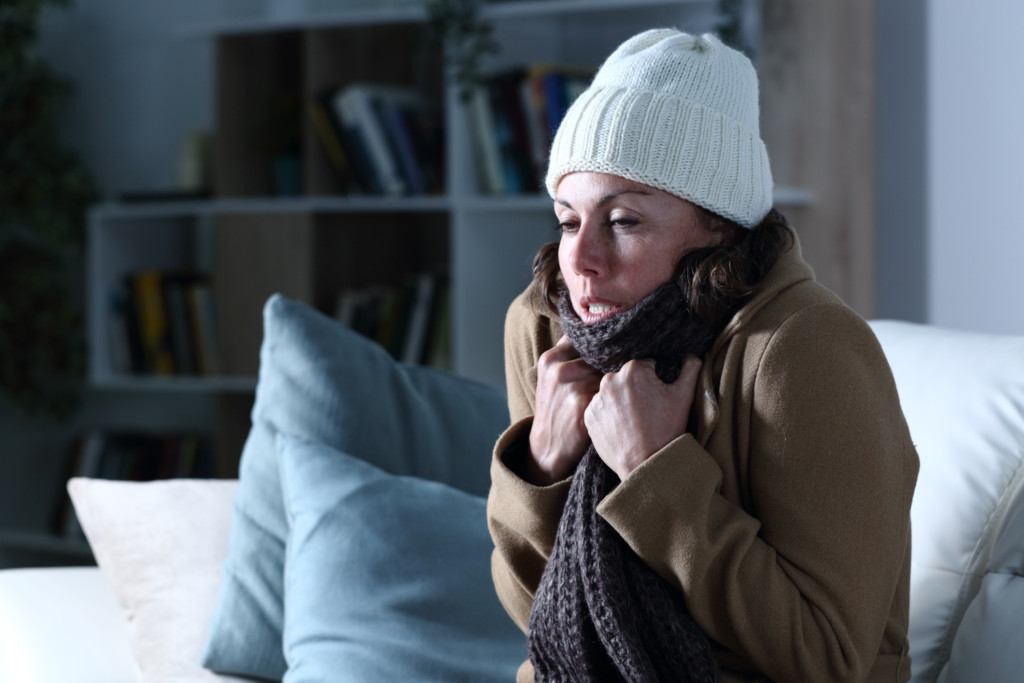
Power outages following catastrophic weather events have become some of the most common and most damaging events that we see. The length of the outage is the most critical factor in measuring the severity of its impact. The longer the outage, the more dominoes fall. When the power goes out, typically a home’s primary heat source is disabled. When the house cools, the risk of frozen water supply pipes rises steeply. A burst pipe in a basement with a disabled sump pump could lead to flooding. Unorthodox methods of heating a house can carry increased risk of fire damage and even severe illness or death.
Tips on How to Prevent Power Outages
To fully prepare for power outages in winter, you may elect to use a generator for heat and emergency power. But please, only use it outdoors and away from windows. Make sure you have carbon monoxide detectors on each floor of your home (including the basement!) and that they have backup battery power. Be sure to have flashlights, flameless lanterns, and plenty of their necessary batteries readily available. Portable chargers are a great option for powering cell phones, emergency radios and rechargeable batteries. Above all, employ safe home heating practices when using an open fire indoors – keep your fire in the fireplace, check the flue, and always have a fire screen present. Compounding one property damage crisis with another is a fate everyone should want to avoid.
Know Who to Call in a Winter Weather Emergency
When the unexpected strikes, who is going to help you solve your problem fast? Circumstance will dictate which specialist to call, but having a physical copy of your emergency contact list already compiled and readily accessible will put you miles ahead of the pack. Don’t call 911. It’s a common mistake. They’ll be busy enough as it is.
Emergency call list:
- Insurance provider
- Your chosen restoration company – for immediate disaster mitigation and to get a plan in place
- Plumber, electrician, HVAC technician
- Nearby home improvement retailers – Home Hardware, Home Depot, RONA, etc. (You don’t want to be the last in the line to rent a dehumidifier when the entire neighborhood has a flooded basement!)
Our goal is to minimize your risk before you find yourself in a catastrophic situation.
We’re always here for you if something does occur. But we’d rather it not happen to you at all.
First Onsite is your 24/7 restoration and recovery partner
First Onsite is your trusted, full-service disaster restoration and reconstruction company, serving Canada, the United States, and beyond. We partner with you to prepare for the threat of catastrophe and to be the first team on-site immediately after disaster strikes.
Our team in your area is backed by national resources, and we scale to meet the needs of your property regardless of size. We have the experience to respond to your property needs while keeping a close eye on environmental changes that could affect you in the future. We stay a step ahead of disaster so you can too.
We are on call 24 hours a day, 365 days a year, and you can request our services at any time.
Download the Winter Weather Storm Restoration Guide
Share This:


 BOLT™ Login