
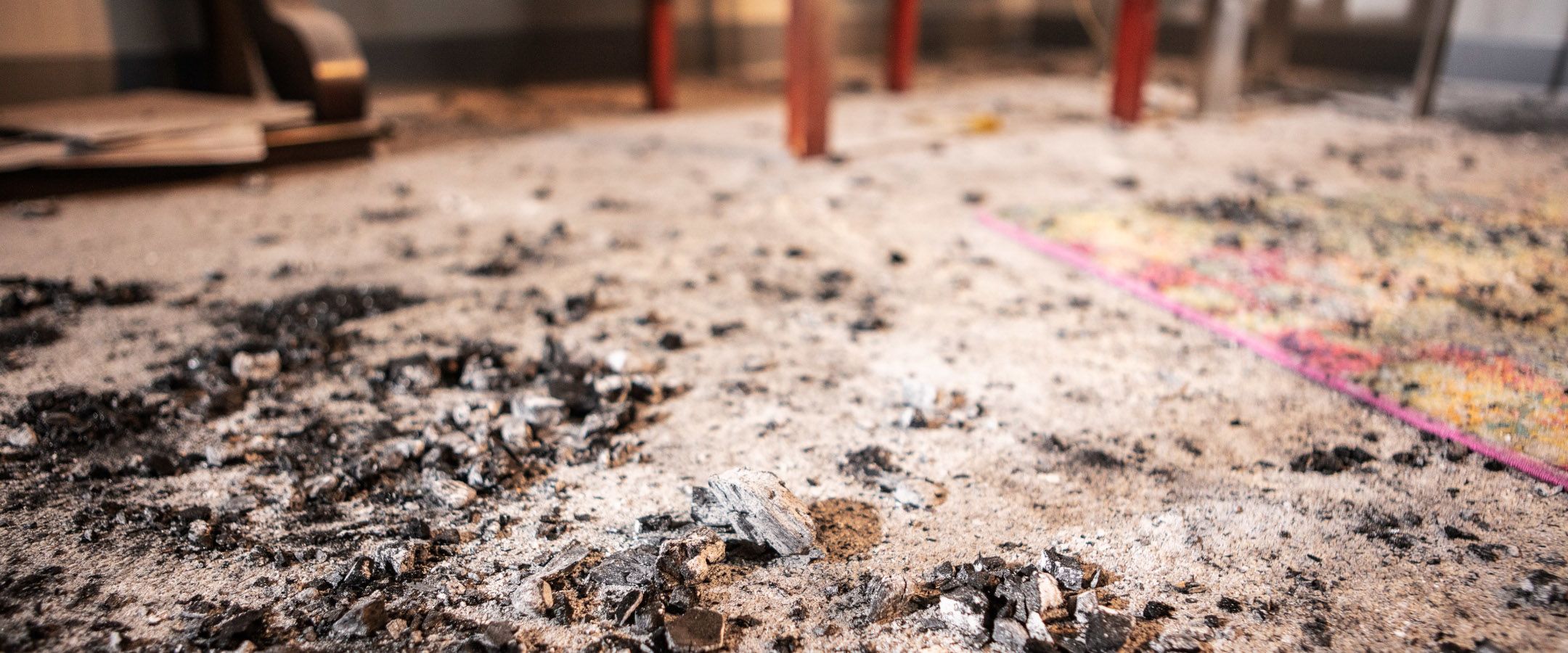
Any fire, no matter how small, can have serious implications for a business or commercial property.
Comprendre ce que sont les dommages causés par la fumée et le feu, ce qu'il faut faire en cas de sinistre et les mesures à prendre pour minimiser les risques est une chose que tout propriétaire devrait prendre en considération. Cela peut aider à accélérer le processus commercial de restauration des dommages causés par un incendie et de restauration des dommages causés par la fumée, et même à réduire la quantité de travail à effectuer.
What Is Fire Damage?
Generally, fire damage involves anything that flames or soot have come in contact with, including the structure and any objects or materials. With a fire, structural damage is always a concern and may require additional structural engineering and safety protocols to repair.
In commercial facilities, office buildings and multifamily residences, it is especially important to perform testing of soot or smoke to determine whether any toxins exist that could prove harmful to occupants. A restoration professional is your best resource for this type of service.
What Is Smoke Damage?
Contrairement aux dégâts causés par le feu, les dégâts causés par la fumée peuvent exister même sans la présence de flammes. Par exemple, un employé pourrait accidentellement cuire un repas au micro-ondes trop longtemps dans la salle de pause, ce qui entraînerait de la fumée et une odeur qui se propagerait dans tout l’étage – ou pire, qui pénétrerait dans le système CVC et circulerait dans tout le bâtiment. En cas de dégâts causés par la fumée, un nettoyage plus direct est nécessaire pour réduire la quantité de particules dans l'air et éliminer les odeurs.
What is the best way to determine whether smoke damage has occurred? The general rule of thumb is that if smoke is circulating to the point where it can be smelled, there is significant likelihood that smoke damage is present. If that’s the case, call a restoration professional.
Partager ceci :


 BOLT™ Connexion